
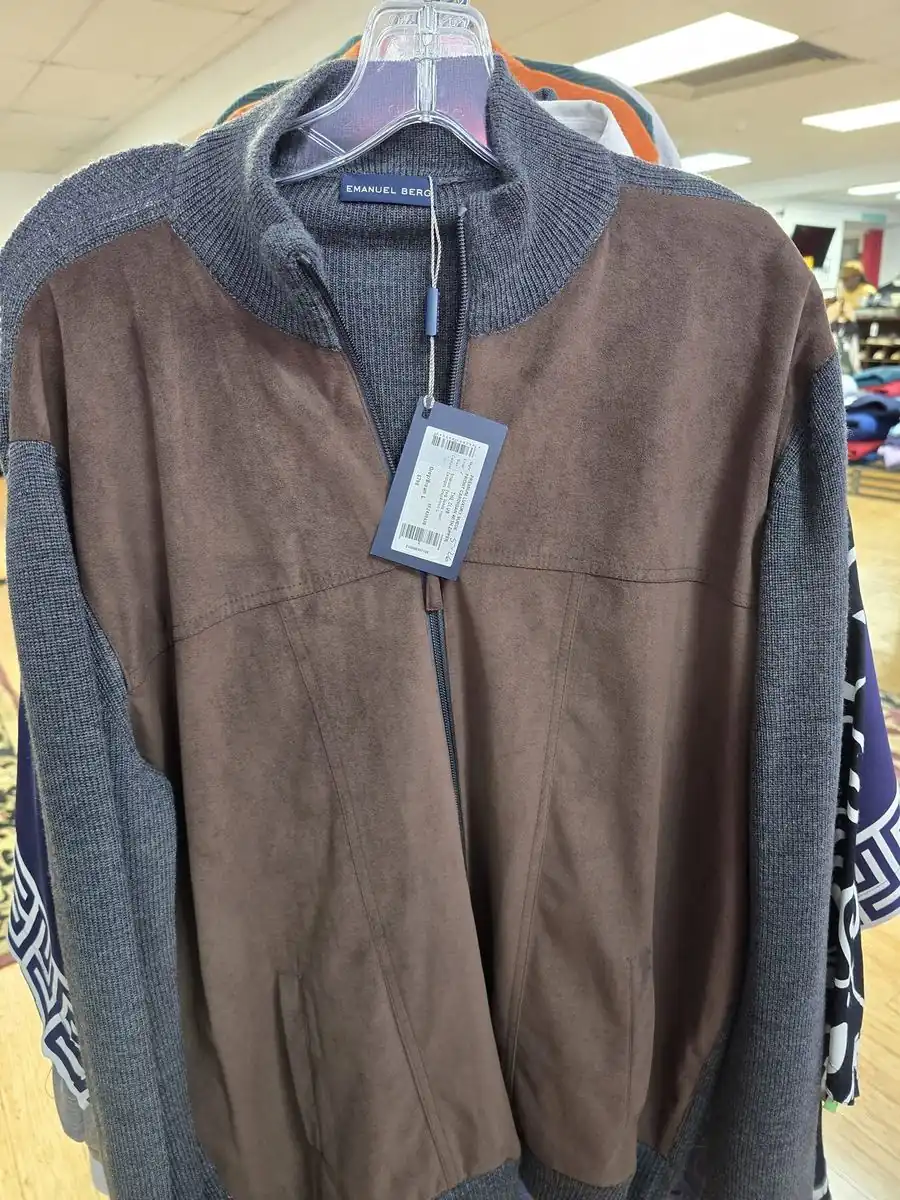
A winter coat in Michigan has a harder job than a winter coat almost anywhere else. It is not just cold, it is wet cold, with lake-effect snow that soaks rather than dusts, wind coming straight across open parking lots, and a February commute that is twenty seconds of weather, forty minutes of a heated car, and twenty more seconds of weather. One coat rarely does all of that well, which is why most men who dress well here own two.
The first is a topcoat or overcoat, wool and tailored, worn over a suit or a sport coat. The second is something insulated and weatherproof for actual snow. Trying to buy one coat that does both jobs is how you end up wearing a parka over a suit, which looks exactly as bad as it sounds.
For the tailored coat, weight matters more than the label on the inside. Coating wool is measured in ounces per yard, and anything under about sixteen ounces is a fall coat wearing a winter coat's name. Melton, a dense and tightly milled wool with a smooth face, is the traditional answer for good reason. It blocks wind, sheds light snow, and holds its shape for years. A little cashmere in the blend adds softness and warmth. A lot of cashmere adds price and fragility. Ten to twenty percent is the sweet spot.
Length is a real decision, not a style whim. A topcoat ending just above the knee covers a suit jacket completely and still lets you get in and out of a car. A full overcoat to mid-calf is warmer and more formal and genuinely annoying to drive in. If your winter is mostly building to car to building, shorter wins.
Fit is where most men go wrong, and there is one rule that matters more than the rest. Try the coat on over the thickest jacket you will actually wear underneath it. The shoulder seam should sit where your shoulder ends, exactly like a suit jacket. You should be able to cross your arms in front of you without the back pulling tight. Sleeves should finish about half an inch past your suit sleeve, roughly at the base of your thumb. A tailor can take in the waist, shorten the length, adjust the sleeves. A tailor cannot fix the shoulders. Buy for the shoulders.
A few details are worth a look before you commit. A full lining through the body and the sleeves lets the coat slide over a suit jacket instead of dragging it up your arms. Pockets should be deep enough for a gloved hand. And a collar that genuinely stands up against wind is worth more to you in January than any design detail on the outside.
For the snow coat, two numbers tell you most of what you need. Down fill power, usually somewhere between 550 and 800, describes the loft of the down and therefore how much warmth you get per ounce of weight. Higher means lighter for the same warmth. The second is the shell, because down is close to useless once it is wet. If you are shoveling a driveway in heavy lake snow, you want a treated or laminated shell over that down, or a synthetic fill that keeps insulating even when damp. Synthetic is heavier and cheaper. Down is lighter and warmer and has to stay dry.
Then there is road salt, which is brutal on dark wool. Brush the coat down when you get home, a soft clothes brush, thirty seconds, working with the nap, and the salt and grit come off before they set into the fibers. Dry clean at the end of the season rather than every month, because the solvent strips the natural oils that make wool weather-resistant in the first place. And hang it on a broad wooden hanger. Never a wire one.
Coats are one of the categories where buying at full retail stings the most. A good wool topcoat is a four-figure garment new, and it is also a garment that lasts ten years if you choose it well. That is the entire argument for buying one here. Our coat racks run both ways, brand new with tags from our retail partners and gently worn consignment pieces from men who bought well the first time, in sizes Small through XXXL.
Come try a few on over whatever you actually wear. We are at 28801 Orchard Lake Road in Farmington Hills, between 12 and 13 Mile, Monday through Saturday, noon to six.